

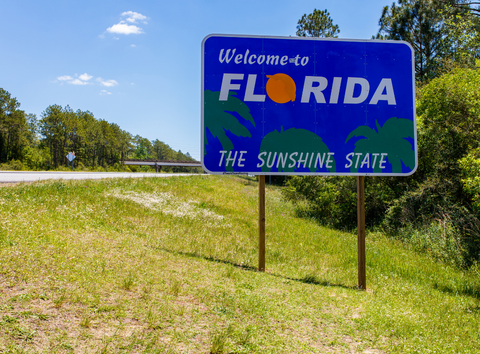
Most of the boxes are unpacked. The car has Florida plates. In a folder you marked “Important” the week you moved, there’s a will you signed up north a long time ago. Ohio, maybe. New Jersey. You haven’t looked at it since.
Nobody moves south thinking about their will. It’s paperwork from an old life, and it sits in a drawer for years without a second thought. Then one day somebody has to use it, and every out-of-state wrinkle in it turns into your family’s problem.
Your Old Will Isn’t Automatically Junk
Good news first. A will you signed correctly in another state is good in Florida too. Florida Statute 732.502 says it plainly: if the will was valid where you signed it, this state honors it. Your Ohio will didn’t dissolve on I-95. It came with you.
The One Kind of Will Florida Won’t Take
There’s an exception, and it catches people. Florida rejects a handwritten will. Lawyers call that a holographic will, which sounds fancy and only means you wrote the thing out in your own hand with no proper witnesses.
A fair number of northern states accept those. Florida does not, full stop. If the only will you own is one you scrawled on a legal pad back home, a Florida court treats you as though you never made a will at all.
The Notary Isn’t What Makes It Real
People get this backwards. A Florida will does not have to be notarized to count. It needs your signature and two witnesses who watch you sign. That’s it. The notary is for something else.
About That Executor You Picked Back Home
Every will names somebody to run things after you’re gone. Florida calls that person the personal representative. You probably call them the executor, and you probably picked whoever in your life is steady and good in a mess. A brother. The friend who always shows up.
Florida has a rule about that friend. Under Statute 733.304, an out-of-state personal representative can serve only if they’re your relative, by blood or marriage. A sibling in Ohio qualifies. A niece does, a grown kid does. The lifelong friend who lives up north and isn’t related to you does not, and there’s no workaround.
So the court sets your pick aside and names someone else. Sometimes that someone is a person you’d never have chosen. The estate can even pay for a bond, an insurance policy on a stranger, to cover the job you’d already handed to a friend.
The Signature That Isn’t There
I sat with a widow in our office a couple of winters ago. Her husband had signed a good, valid will in Connecticut in the nineties, witnessed by two neighbors. One of them had since died. The other had moved to Arizona, and nobody had an address for him.
In Florida, when a will isn’t self-proving, a court needs one of the original witnesses to swear the signature is real. She spent weeks, and a good chunk of the estate, hunting down a man she’d met twice at a barbecue in 1996.
That is what self-proving avoids. It’s a short notarized page, signed by you and your witnesses at the same sitting, that tells the court the will is genuine so nobody has to track anyone down later.
Skip it and Florida makes someone prove the will the hard way, by a witness’s sworn oath in front of a circuit judge, a clerk of court, or a commissioner the court appoints for the task. You can make a will self-proving the day you sign it or years afterward. Out-of-state wills often skip the page or use their home state’s version, and a Florida clerk won’t take the wrong form. Re-sign yours here, or add the Florida affidavit, and your family never has to find the barbecue guy.
The Half-Acre Rule Nobody Tells You About
Florida wraps your primary home in homestead protection, written straight into the state constitution. Most of what it does is a gift, keeping creditors away from the roof over your head.
There’s a catch, though. Homestead also limits who you can leave the house to, and the size of what counts is oddly specific: up to half an acre inside a city or town, or up to 160 acres outside one. Most lots in Port Orange and Deltona sit well under that half-acre line.
The limit on who inherits only bites when you’re survived by a spouse or a minor child. Say you meant the beach condo for your daughter from a first marriage, and you’ve since remarried. Florida Statute 732.401 can hand your current spouse a life estate instead, the right to live there until death, with your daughter inheriting only after that. For a blended family, that’s the reverse of the plan.
You Cannot Disinherit a Spouse With a Pen
This one surprises transplants more than anything else. In Florida you can’t cut your spouse out of your will on your own. Not without a signed marital agreement, a prenup or a postnup, that says so.
A left-out spouse can ignore the will entirely and claim the elective share, thirty percent of the estate. And that math reaches assets you wouldn’t expect, like jointly held accounts, certain trust property, and life insurance.
There’s a second trap for the newly remarried. Sign your will before the wedding, leave your new spouse unmentioned, and Florida can give that spouse at least half your estate anyway, as if you’d died with no will at all. Marriage doesn’t cancel a will here. It quietly rewrites who gets what.
Whatever You Do, Do Not Write on the Will
Here is the mistake people make once the will is signed. You cannot fix it by crossing out a name or penciling a note in the margin. Do that and you can void the change, or void the whole will.
The right way to update a signed will is a codicil, a short amendment executed with the same formalities as the will itself, or a brand-new will. Marks on the original are how a tidy estate turns into a courtroom fight.
The Papers That Work While You’re Still Alive
A will does nothing for you while you’re breathing. It only takes effect after you’re gone. So it’s no help the afternoon you’re in a bed at Halifax Health, awake but unable to say what you want done.
That’s a separate stack of documents, and your northern versions were written for northern law. Florida wants its own. Four are worth signing the same day as the will.
A durable power of attorney lets someone pay your bills and manage your property if you can’t, and it keeps your family out of a guardianship case in court. A health care surrogate names the person who talks to your doctors, right down to deciding when to stop treatment. A living will puts your own wishes about life support in writing. And a pre-need guardian designation lets you name, ahead of time, who’d be guardian over you, and over your kids, if it ever came to that.
The House You Never Sold Up North
There’s a wrinkle for anyone who kept property back home. Say you moved to Ormond Beach but never sold the lake place in Michigan, or the family house nobody could agree to list.
When you die, that out-of-state property doesn’t fold neatly into your Florida probate. It usually needs its own separate probate in the state where it sits, a process called ancillary administration. A Florida estate plan built with that house in mind can spare your family two courthouses in two states.
No, It Does Not All Go to Tallahassee
A myth worth killing: if you die without a valid will, your property does not go to the State of Florida. That almost never happens. It would take having no living heirs at all. No spouse, no kids, no cousins, nobody.
What happens instead is plainer, and for a lot of people, worse. A rigid statutory formula splits everything for you in fixed shares, with no room for the stepchild you raised, or the sister you’re closest to, or the charity you cared about. The law doesn’t know your family. It follows the chart.
You Don’t Have to Start From Scratch
None of this means you throw out what you brought and buy a whole new plan. You don’t. Any firm that tells a new arrival otherwise is padding a bill.
The standard advice for people who move here is simpler than a teardown. Have a Florida lawyer read the will you already have. Check that it’s executed the way Florida requires. Make sure the witnesses can still be found. Confirm your personal representative can serve. Most of the time that’s a light fix: re-sign with the right witnesses, add the documents you’re missing. Once in a while it’s a new will.
There’s a reason lawyers say there’s no such thing as a simple will. Even a small estate hides corners only someone who does this every week will catch. The Palm Coast attorneys and DeLand attorneys who handle out-of-state wills see these problems constantly, and they can tell you in a single sitting whether yours needs a signature or a rewrite.
How We Can Help
At Rice Law Firm, our Daytona Beach attorneys have handled Florida wills, trusts, and estates across Volusia and Flagler County for more than twenty-five years, and we explain all of it in plain English, without the runaround. Bring the will you drove down with. We’ll tell you what holds up under Florida law and what needs fixing before it ever matters.